Summary
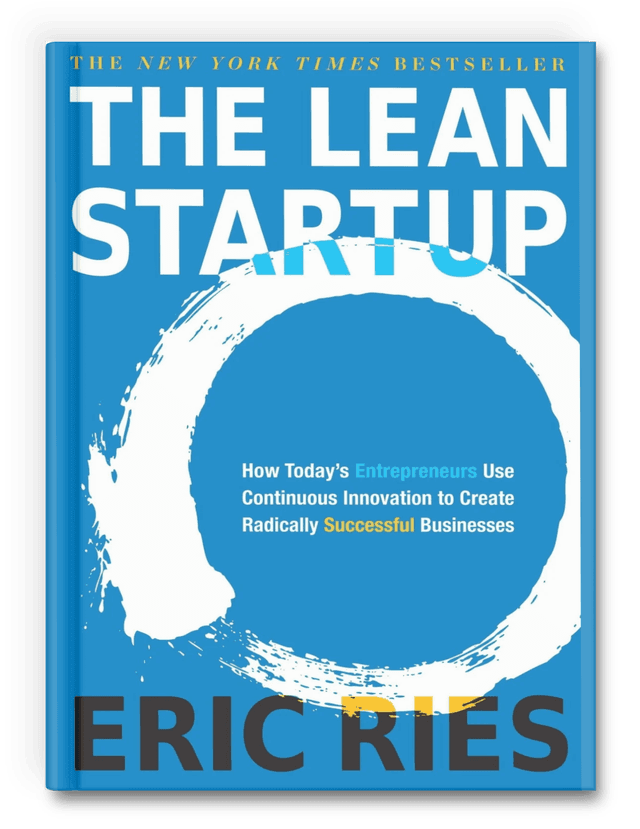
The Lean Startup by Eric Ries is a methodology for developing businesses and products that aims to shorten product development cycles and rapidly discover if a proposed business model is viable. The book introduces the Build-Measure-Learn feedback loop and emphasizes the importance of validated learning over traditional business planning.
"The Lean Startup method teaches you how to drive a startup-how to steer, when to turn, and when to persevere-and grow a business with maximum acceleration."
The book is structured around the core principles of the lean startup methodology: Build, Measure, and Learn. Ries argues that startups should focus on learning what customers really want, not what they think they want, and should do so as quickly and cheaply as possible.
Key Insights
The Build-Measure-Learn Loop
The core of the lean startup methodology is the Build-Measure-Learn feedback loop:
- Build - Create a minimum viable product (MVP) to test your hypothesis
- Measure - Use metrics to determine if you're making progress
- Learn - Use the data to decide whether to pivot or persevere
Minimum Viable Product (MVP)
An MVP is the version of a new product that allows a team to collect the maximum amount of validated learning about customers with the least effort. The goal is to test fundamental business hypotheses quickly and cheaply.
Validated Learning
Ries emphasizes that startups exist to learn how to build a sustainable business. This learning can be validated scientifically by running experiments that test your vision.
Pivot or Persevere
The key decision every startup faces is whether to pivot (change direction) or persevere (stay the course). This decision should be based on validated learning, not gut feelings.
Personal Reflection
This book has been incredibly influential in how I think about product development and business strategy. The lean startup methodology has applications far beyond just startups—it's a powerful framework for any kind of innovation or change initiative.
The most impactful concept was the idea of validated learning. I realized that many of my assumptions about what customers want were just that—assumptions. The lean startup approach of testing these assumptions quickly and cheaply has been invaluable.
The MVP concept has been particularly useful in my work. Instead of trying to build the perfect product, I now focus on creating the simplest version that can test my key assumptions.
Key Lessons
- Start with assumptions - Every business idea is based on assumptions that need to be tested
- Build MVPs - Create the simplest version that can test your key hypotheses
- Measure what matters - Focus on metrics that indicate real progress, not vanity metrics
- Learn from data - Use data to make decisions, not just intuition
- Pivot when necessary - Be willing to change direction based on what you learn
Practical Applications
Since reading this book, I've implemented several strategies:
- Hypothesis-driven development: Starting with clear assumptions and testing them
- MVP approach: Building simple versions to test key concepts
- Data-driven decisions: Using metrics to guide product decisions
- Rapid experimentation: Testing ideas quickly and cheaply
- Customer feedback loops: Regularly gathering and acting on customer input
Favorite Quotes
"The only way to win is to learn faster than anyone else."
"A startup is a human institution designed to create a new product or service under conditions of extreme uncertainty."
"The goal of a startup is to figure out the right thing to build—the thing customers want and will pay for—as quickly as possible."
"Validated learning is the process of demonstrating empirically that a team has discovered valuable truths about a startup's present and future business prospects."
Rating and Recommendation
I give this book a 4/5 rating. It's a practical and actionable guide to building successful businesses through validated learning. The methodology is clear, the examples are relatable, and the strategies are immediately applicable.
I would highly recommend this book to anyone who:
- Is starting a new business or product
- Wants to understand how to validate business ideas
- Seeks to improve their product development process
- Is interested in entrepreneurship and innovation
- Wants to learn a systematic approach to building successful businesses
The book is particularly valuable for entrepreneurs, product managers, and anyone involved in creating new products or services in uncertain environments.