- We've normalized judging entire human beings based on a 15-second clip. That's not connection—that's laziness.
- Personality books and tests are starting guides, not prisons. The moment you use them to cage someone, you've missed the point entirely.
- Social media doesn't just show you content—it slowly edits who you become. And most of us haven't even noticed.
- We've normalized comparing our unfiltered inner world to someone else's highlight reel and calling the resulting pain "insecurity." It's not insecurity. It's a rigged game.
- True connection requires the one thing we've been trained to avoid: sitting with the unknown.
Hello~~ 😸, have you ever felt like someone "summarized" you before they even spoke to you? Maybe they saw your profile, read your bio, or watched one of your videos, and decided they already knew exactly who you were.
We live in an age of High-Speed Categorization. In the time it takes to scroll through a single Reel, our brains have already filed the person on the screen into a neat little box. We've labeled their temperament, judged their intelligence, and decided if they are "our kind of person."
And we've normalized this. We treat it like it's just "how things work now." But it's not normal. It's a loss. A massive, quiet loss that most of us don't even register because everyone around us is doing the same thing.
The Illusion of the Digital Persona
To exist online, we must shrink ourselves. Character limits. Bio fields. Narrow formats. We squeeze who we are into tiny containers, and over time, we start to believe the container is who we are.
When we spend hours scrolling, we stop seeking depth. We start scanning. We look at a creator and think, "Ah, they are the productive type," or "They are the chaotic artist type." But what happens when the productive person suffers a silent burnout? Or when the chaotic artist craves stillness? Those shifts don't perform well on a feed—so we suppress them. We edit ourselves to stay "consistent."
Think about that for a second. We've normalized editing our own identity so that strangers on the internet can understand us faster.
That's not self-expression. That's self-erasure.
"Social media is a shallow reflection of the human experience."
When you view someone through a screen, you are seeing a curated, edited, and often performative version of their identity. The "likes" and "comments" often override the reality of who they actually are. A "Thoughtful Person" recognizes that the digital persona is a mask—it's not the source of the person's soul.
We've traded the slow, sacred process of getting to know someone for the shallow comfort of putting people in boxes. And somehow, we've convinced ourselves that this is "connecting."
Analyze your 'Digital Audit'. How quickly do you file a person into a category based on their social media?
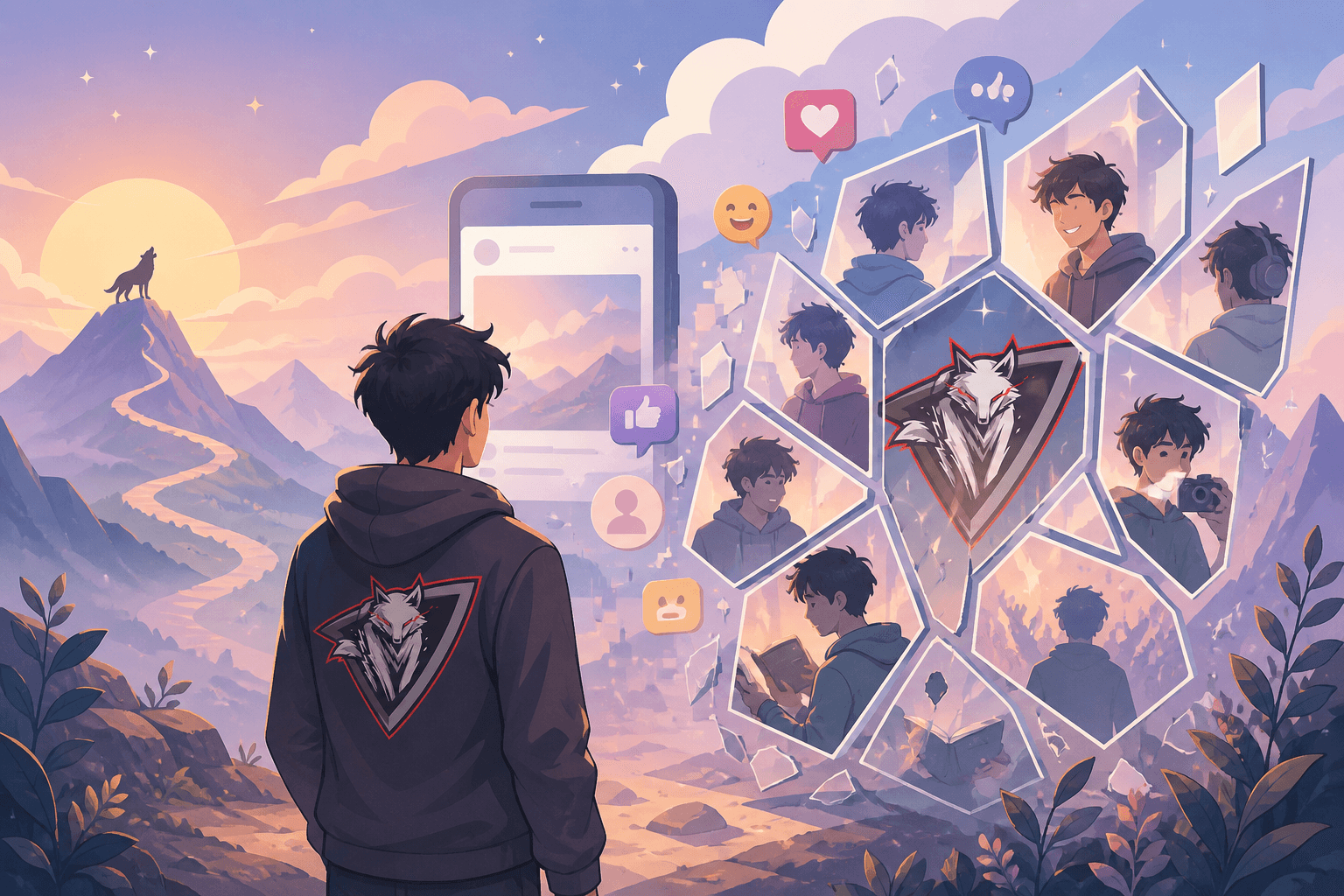
1. The "Snippet" Fallacy
I've seen this happen countless times. Someone reads a few chapters of a popular personality book or watches a handful of "psychology hacks," and suddenly they believe they can read every soul they meet. They see a single trait or a specific reaction and say: "Oh, you're just a [Type]. That's why you do that."
This happened to me. People who claimed to "know" my personality used that knowledge to judge me, to limit me, and to cage me into their own expectations. It affected me deeply—I began to wonder if I was really just a collection of traits in a book.
And here's what bothers me the most: nobody questioned it. Nobody in that environment stopped and said, "Wait—maybe reading one book doesn't make you qualified to define another human being." It was just accepted. Normal. Harmless. But it wasn't harmless. It rewired how I saw myself.
This form of armchair psychology has become the default language of the internet. We think that by learning a system's vocabulary, we've bypassed the hard work of vulnerability. We use acronyms and archetypes as shields, keeping others at arm's length while claiming to understand them perfectly.
"Labeling is a barrier to true empathy."
By assigning a label, you stop truly seeing the person in front of you. You stop looking for the nuance and start looking for confirmation of your label. It's more comfortable for the mind, but it's fatal for a real connection.
A label is like reading the summary on the back of a book and believing you've read the whole story. You get the genre and the main character—but you miss the poetry between the lines, the silence between the chapters, the moments that made the author cry while writing them. We've normalized treating each other like summaries. And then we wonder why nobody feels truly seen.
| What The Label Captures | What The Label Erases |
|---|---|
| Surface-level behavioral patterns | The reason behind the behavior |
| How you act when observed | Who you are when nobody's watching |
| Your most visible habits | Your capacity for radical change |
| The trait that's easiest to categorize | The quiet contradictions that make you you |
2. Maps vs. Territories
I always say that personality frameworks are maps, not the territory itself. A map is a useful guide for a journey, but it isn't the ground you're walking on.
- The Map: "You seem to value introversion and deep focus." (The Theory)
- The Territory: The actual, messy, beautiful reality of your life—your traumas, your dreams, and your capacity for change. (The Reality)
When we confuse the map with the territory, we treat people like problems to be solved rather than mysteries to be experienced. A map can tell you where a mountain stands, but it cannot tell you the scent of the pine trees, the chill of the morning wind, or the quiet ache in your legs as you climb. Frameworks are meant to point us toward understanding; they are never meant to be the boundary lines of our growth.
When we use these maps to cage others, we miss the magic of discovery. We stop being curious and start being "right."
And that's the trap—someone reads one book, watches one series, and suddenly believes they've mapped the entire coastline of your soul. But people are not fixed landscapes. We shift. We grow. We heal wounds that no one saw. The version of me that someone labeled last year may not exist anymore—and the map, by definition, can never keep up.
"Maps are compasses, not borders."
I built Youniverse because I believe personality frameworks have real value—they illuminate patterns you might never notice on your own. But they illuminate; they don't imprison. The moment a framework stops making you curious about your own complexity and starts making you feel "figured out," it has failed its purpose. Treat every test result like a flashlight, not a cage.
When was the last time someone truly surprised you? How did you handle it?
3. The 15-Second Judge
Social media rewards extreme characterization. To be "successful" on a screen, people often have to lean into a caricature of themselves. They become a performance that must stay consistent to stay relevant. But when we watch these performances, we forget that we are seeing a curated highlight reel.
Nuance is the first casualty. A complex emotional state gets flattened into a relatable meme. A lifetime of healing gets summarized into "3 steps to fix your attachment style." We know the terms for every wound now, but we have forgotten how to sit quietly with the pain.
And here's what we've really normalized without questioning it: the algorithm doesn't just show you content. It shapes who you become. When a particular version of you gets rewarded—the witty one, the deep one, the motivational one—your brain gets a dopamine hit that says: "More of this. Less of everything else."
So you start pruning. You cut the parts of yourself that don't "perform." You silence the messy questions. You hide the unresolved feelings. And slowly, without noticing, you stop being a person who creates content and become content that performs a person.
I've caught myself doing this. Wanting to write about something raw and unfinished—a question I hadn't figured out yet, a feeling I couldn't name. But a voice in my head would whisper: "That's too messy. That's not 'on brand.'" The day you start filtering your inner world to match a digital image is the day you need to stop and ask yourself who you're really living for.
Your worth is not defined by how easily you can be categorized. You are a vast constellation of experiences, not a single snapshot on a screen. The algorithm cannot hold your depth; it can only chase your attention.
4. The Rigged Comparison
Let's stop pretending this is "just how social media works" and call it what it actually is.
Every time you open that app, you are comparing your unfiltered inner world—your doubts, your failures, your 3 AM anxieties—with someone else's carefully curated best moments. And when you feel heavy afterward, you call it "insecurity." But it's not insecurity. It's a rigged game. You were never meant to win that comparison because you're not comparing equal things.
The person with the perfect feed has cried in their car. The "happy couple" has had fights they will never post. The person who looks like they have it all figured out is making it up as they go—just like you.
We've normalized this silent self-destruction. We scroll, we feel inadequate, and we blame ourselves for feeling that way. We never stop to ask: "Wait—why am I comparing my entire inner life to someone's 15-second performance?"
"You're comparing your 'behind-the-scenes' with their 'highlight reel'."
You will lose this comparison every single time—not because you are less, but because the game was never fair. You're measuring your raw, unedited reality against a performance. Stop playing.
How does constant comparison affect your self-perception? Be honest with yourself.
5. We've Learned to Name Our Pain—But Not to Heal It
We can now identify "anxious attachment," name our "trauma responses," and categorize our "emotional triggers" with clinical precision. Social media gave us the vocabulary. That part is genuinely valuable.
But here's what we've normalized that nobody talks about: knowing the name of the wound is not the same as healing it. You can have an encyclopedia-level understanding of your own trauma and still be running from it. Naming is the beginning—we've mistaken it for the end.
Social media encourages us to package pain into clean, consumable stories. Generational trauma becomes a 60-second voiceover. Grief becomes a "healing journey" with a tidy before-and-after arc. And we start to believe that if our suffering doesn't fit into a clean narrative, there's something wrong with us.
But real emotions aren't neat. Sometimes you're sad for no clear reason. Sometimes you're angry at someone you love. Sometimes you feel contradictory things at the same time—and no infographic on earth will explain the overlap. That's not a dysfunction. That's being human.
| What We Post | What's Actually True |
|---|---|
| "I've healed from my past" | "I still flinch sometimes, but I keep choosing to show up" |
| "I've set healthy boundaries" | "I still feel guilty when I say no, and I'm sitting with that" |
| "I've found my purpose" | "I'm still searching, and some days that terrifies me" |
| "I'm thriving" | "I'm surviving today, and that's enough" |
There is a quiet heroism in the second column. It's not shareable. It's not clean. But it's true. And we need to stop treating "messy" as if it's the same thing as "broken."
6. The Fear of Not Knowing
Why do we cling so tightly to these shortcuts? Because mystery is terrifying. To look at another human being and admit, "I do not fully understand you," requires something most people aren't willing to give: a surrender of control.
It is so much safer to categorize someone immediately. If they are an "extrovert," we know how to act. If they are a "perfectionist," we know what to expect. Labels give us a script. And scripts are comfortable.
But comfortable is lonely. When people decided they "knew" me—when they slotted me into a personality type and stopped being curious—I felt more invisible than ever. Because being reduced to a type isn't being seen. It's being filed. And there is a world of difference between someone saying, "I know who you are" and someone saying, "I want to keep discovering who you are."
"The fear of the unknown is the fear of real connection."
We label others because uncertainty feels unsafe. But the deepest connections in your life will always live in the space between what you know and what you don't. If you refuse to enter that space, you will only ever touch the surface of the people around you.
7. Reclaiming Your Depth
How do we move past the mirage?
- Assume Complexity: Every person you meet carries infinitely more layers than any book or reel could ever describe. They have quiet battles you know nothing about, and silent victories they will never post.
- Ask, Don't Label: Instead of saying "You're doing that because of your type," try asking "What was the thought process behind that?" Let them tell their own story.
- Practice Digital Fasting: Spend time in spaces where you cannot easily categorize people. Talk to strangers without looking up their profiles. Listen to stories that don't wrap up neatly.
- Value the Mystery: Leave room for people to surprise you. Leave room for yourself to surprise you.
- Sit With The Unresolved: Not every feeling needs a name. Not every question needs an answer right now. The ability to hold ambiguity without panic is one of the deepest forms of emotional maturity.
"Identity is a dynamic journey, not a static destination."
If you don't allow yourself or others to change, you are living in the past. True mastery is the ability to update your beliefs about who someone is as you receive new information.
Final Thought: The Mirage vs. The Mountain
I was once lost in the labels others placed on me. It took a long time to realize that those labels were their limitations, not mine. They were looking at a thumbnail and thinking they saw the whole gallery.
I spent so much energy trying to be the version of myself that others had already decided I was. I silenced my contradictions, performed consistency, and suffocated the real me underneath a character that was easier for other people to deal with. And it was exhausting—not because the performance was hard, but because I was disappearing inside it.
The turning point was quiet. It was the day I stopped asking, "How do they see me?" and started asking, "How do I experience myself?" That single shift changed everything.
Don't let the mirage fool you. The most beautiful parts of a person are the ones that can't be captured in a 15-second snippet or a personality test. They are the parts that require Time, Presence, and Silence.
You are more than your labels. You are more than your reels. You are the universe in motion. 🐺✨
What labels have people tried to put on you? How do you break free from the "mirage" of social media? Let's talk about it.
You can connect with me on Facebook, Github, or Linkedin. Let's keep moving forward together.
Remember: A label is a starting point, not a destination.