Hello~~ 😸, color is one of those things we often take for granted, but it is actually one of the most powerful tools in our "psychological toolkit." Before someone reads your name, sees your logo, or hears a single word you have to say, they feel your brand through the colors you choose.
Color bypasses the rational mind and speaks directly to the emotions. It’s an immediate, silent signal that tells the world—and yourself—who you are and what you stand for.
The Silent Language of Emotion
"Colors are the emotional 'handshake' of your visual identity."
Before a single word is spoken, your colors have already set the mood. Choosing a palette isn't just an artistic choice; it's an act of empathy. You're deciding how you want to make someone feel when they step into your world.
Every color has a job to do. When you’re crafting a brand—or even just organizing your physical space—you have to move past "what looks good" and start asking: "What emotion am I trying to evoke?"
- Trust & Stability: Deep blues, muted greys, and navy speak of reliability, depth, and a grounded mindset.
- Energy & Passion: Vibrant oranges and soft, warm reds signal movement, excitement, and a bias toward action.
- Growth & Calm: Natural greens and soft pastels suggest a focus on healing, mental expansion, and a "Thoughtful Person" mindset.
- Clarity & Logic: High-contrast blacks, whites, and sharp yellows signal a commitment to transparency and straight talk.
If your life had a signature color palette right now, what would it be broadcasting to the world?
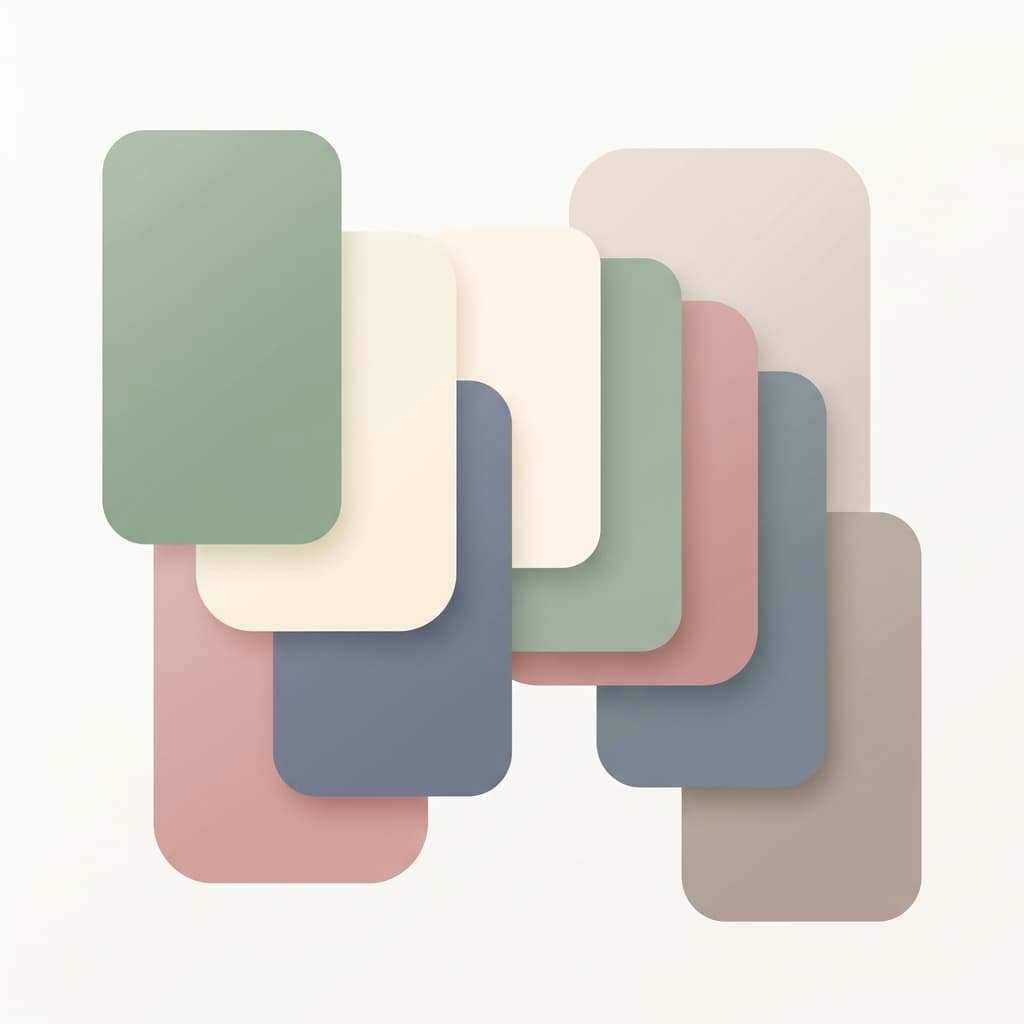
🏗️ Crafting a Disciplined System
In design, as in life, a random collection of choices is just noise. But a system is a disciplined choice. To build a brand that is both scalable and authentic, you need three core pillars:
1. The Core Primary (Your Main Energy)
This is the color that represents your fundamental value. It’s the "hero" of your visual story. If you stand for calmness and focus, your primary might be a soft teal. If you stand for bold, independent thought, it might be a deep, dark indigo.
2. The Grounding Neutrals (Your Daily Habits)
These are the unsung heroes of your palette. Your greys, off-whites, and charcoal blacks provide the necessary contrast for your primary color to shine. In life, these represent your "boring" but essential daily rituals—the baseline habits that allow for your big creative wins.
3. The Semantic Colors (Your Feedback Loops)
Success, warning, and error colors are psychological triggers. We’ve been conditioned to see green as "go" and red as "stop." Respecting these triggers helps reduce "mental friction" for anyone interacting with your work. It creates a sense of safety and predictability.
Consistency builds trust. When you use the same colors consistently across your website, your social media, and your products, you're telling your audience that your system is stable and reliable. It’s a visual way of saying, "I have the discipline to follow through."
Accessibility as an Act of Kindness
In the tech world, we often talk about contrast ratios and standards. but at its heart, Accessibility is Empathy. If your text is hard to read because the colors are too similar, you're creating a barrier between your message and the person who needs to hear it.
Ensuring that your brand is accessible isn't just a technical requirement—it’s a way of ensuring that everyone, regardless of their visual ability or their environment, is welcome in your space. It is a form of design-based kindness.
Analyze your 'Visual Clarity'. Is your current brand (or personal style) making it easy or hard for people to understand your message?
Final Thought: The Mindset of the Palette
At the end of the day, your brand is a reflection of your internal state. Are you choosing colors because they are trendy, or because they are true?
A "Thoughtful Person" approach to design is about finding the intersection where your values meet your visuals. It’s about limiting your choices to a few purposeful colors so that your message can finally shine through the noise.
"True freedom comes from setting disciplined boundaries."
By committing to a specific palette, you actually gain the freedom to express yourself more clearly. You stop worrying about "what color should I use" and start focusing on "what story should I tell."
Focus the emotion. Simplify the choice. Let the colors speak. 🐺🎨