Hello~~ 😸, for the longest time, I fell for the "Romantic Myth" of the artist. I believed that "Art" was something that happened only when inspiration struck like a lightning bolt. I would wait for the perfect mood, the perfect light, and the perfect idea. But I soon realized that waiting for the Muse is a recipe for stagnation.
True art—and true growth—comes from the discipline of the process. It’s about showing up to the sketchbook when you don’t feel like it, making "bad" sketches, and trusting that the consistent practice will eventually yield something beautiful.
The Zen of Repetitive Practice
"Mastery isn't about the final piece; it's about the evolution of your own soul."
Most people see the polished result and ignore the hundreds of discarded drafts. But those drafts aren't failures—they are the "Training Data" for your intuition. Every "bad" sketch is a necessary step toward a clearer vision. You are building a relationship with your own patience.
When I sit down to draw, I’m not just making a picture. I’m training my mind to stay present in a world that demands instant results. The act of slowly layering color or refining a single line is an act of rebellion. It’s a way to find peace in the repetitive, the mundane, and the difficult.
When you're working on a creative project, where is your focus currently sitting?
From Play to Purpose: The Creative Architecture
My sketchbook is my "Sanctuary"—a place where I can play without rules. But to turn that play into something useful—like a brand identity or a website—I have to transition from Play to Constraints. This is where the artist becomes an architect.
The 4-Step Cycle:
- Explore (The Wild Hunt): Let the lines go wherever they want. No judgment. No rules. Just raw curiosity.
- Identify (The Pattern Match): Look back at your "mess" and find the shapes, colors, or feelings that resonate with your goal.
- Define (The Rule Set): Set the boundaries. What is the line weight? What is the color palette? What is the primary emotion?
- Execute (The Focused Build): Create something within those boundaries.
We often think that rules limit creativity, but the opposite is true. Infinite choice leads to paralysis. By setting constraints—like choosing only three colors or one specific tool—you free your mind to focus on the message instead of the mechanics.
The Art of Showing Up
I used to be afraid of the blank page. Now, I see it as a Mindset Reset. It doesn't matter what I did yesterday—good or bad. Today is a fresh opportunity to practice the discipline of creation. This mindset has helped me not just in art, but in everything—from building complex software to maintaining personal relationships.
The magic isn't in the brush or the high-end tablet. The magic is in the human being who refuses to give up on their vision, one line at a time.
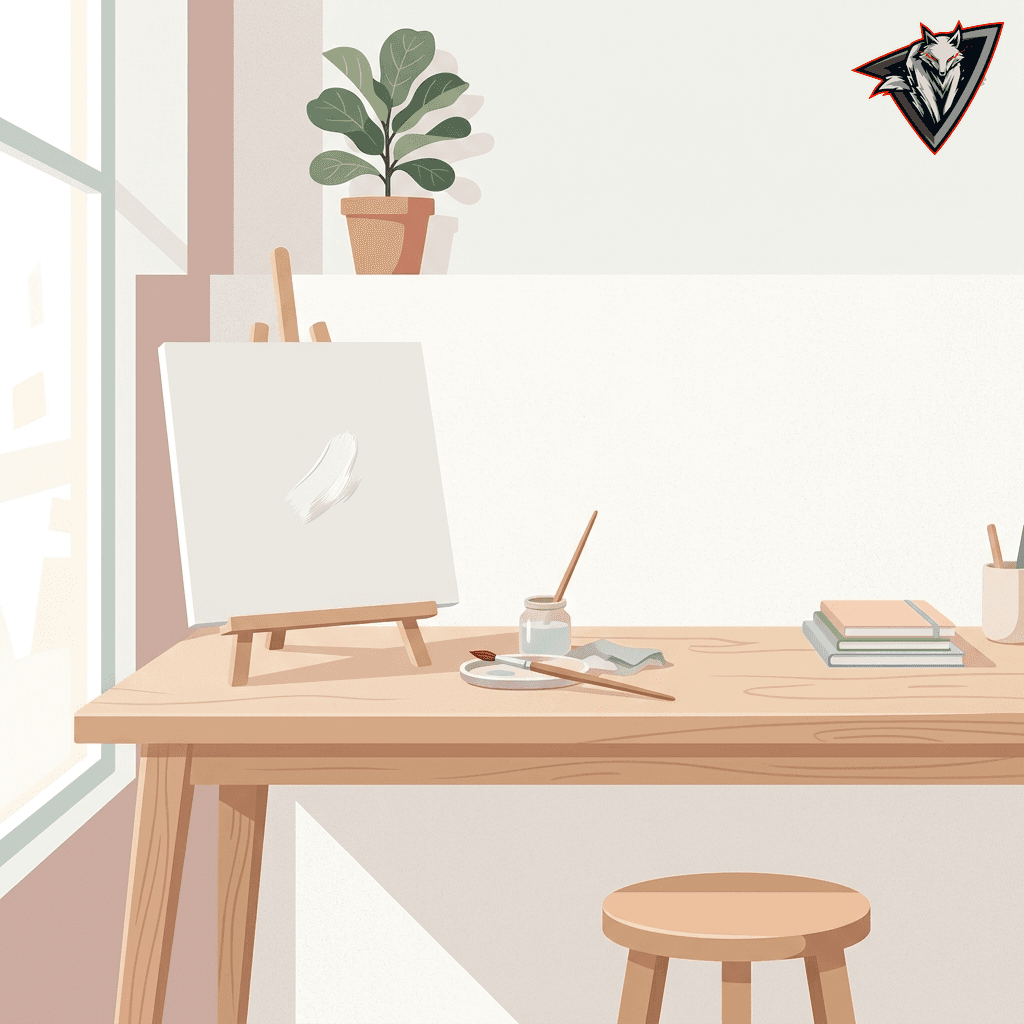
Identify your 'Creative Threshold'. How do you handle the friction of a 'bad' creative day?
Final Thoughts: Designing Your Life
At its core, your life is your most important piece of art. The habits you build, the way you treat others, and the discipline you show in your daily routines are the "lines" and "colors" of your existence.
"Don't wait for the 'Muse'. Build the 'Studio'."
Inspiration is a visitor, but discipline is a resident. If you build a consistent system of practice, you don't have to wait for the light to find you—you'll already be working when it arrives.
Trust the process. Refine the system. Stay creative. 🐺✍️